Start My IRS Transcript Review — $495

How to Read an IRS Transcript (Codes Explained + What They Mean for You)
Confused by IRS transcript codes like 150, 570, or 846? Learn how to read your IRS transcript, understand what the IRS is doing, and know exactly what to do next.
Jeffrey Morris, EA
4/4/20265 min read
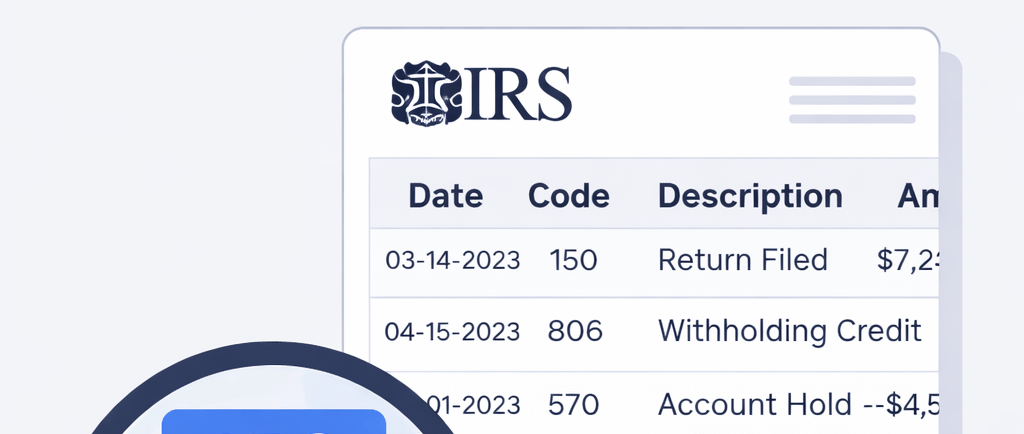
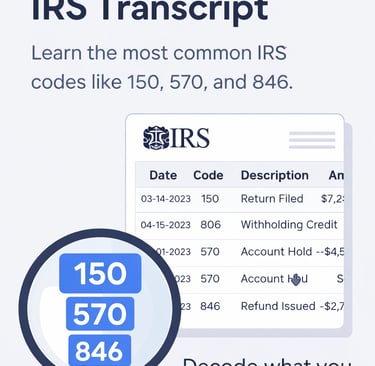
How to Read an IRS Transcript (Step-by-Step Guide + Key Codes Explained)
If you’ve looked at your IRS transcript and felt confused, you’re not alone. Most taxpayers expect to see a clear balance or explanation, but instead find a list of dates, amounts, and three-digit codes that are difficult to interpret.
An IRS transcript is not written for the public. It is a system-generated record used internally by the IRS to track activity on your account. Once you understand how to read it properly, it becomes one of the most valuable tools for understanding your tax situation.
This guide explains how IRS transcripts work, what the most important codes mean, and how to read your transcript step by step.
What an IRS Transcript Actually Shows
An IRS transcript is a record of your tax account activity for a specific year. It includes your filed return, assessed tax, payments, penalties, and any actions taken by the IRS.
The most useful version for resolving tax issues is the Account Transcript. This transcript shows a chronological history of your account, allowing you to see exactly what the IRS has done and when.
Rather than summarizing your situation, the transcript lists each action individually. That is why it often feels confusing at first. It is not a summary—it is a timeline.
What IRS Transaction Codes Mean
IRS transcripts use three-digit transaction codes to represent actions taken on your account. These codes come from the IRS Master File system and are used to track processing, adjustments, notices, and enforcement activity.
Each code corresponds to a specific event. For example, one code shows that a return was filed, another shows that a payment was applied, and another indicates that the IRS has placed a hold on your account.
The challenge is that these codes are not written in plain language. Understanding them requires translating system terminology into real-world meaning.
The Most Important IRS Transcript Codes to Know
While there are hundreds of IRS transaction codes, only a small group appears frequently and drives most tax situations.
Code 150 means your tax return has been processed and the IRS has officially assessed the tax. This is the starting point of your account for that year.
Code 806 represents federal tax withholding applied to your account. This typically comes from wages or other income sources where taxes were withheld.
Code 846 indicates that a refund has been issued. When this code appears, it usually signals that the account has been fully processed and resolved for that tax year.
Code 570 means additional account action is pending. In simple terms, the IRS has placed a hold on your account and needs to review something before proceeding.
Code 971 shows that a notice has been issued. This means the IRS has sent a letter explaining an issue, request, or update related to your account.
Code 420 indicates that your return has been selected for examination. This is commonly associated with an audit or a deeper review of your return.
Code 276 reflects a failure-to-pay penalty. This is applied when taxes are not paid by the required deadline and will increase your balance over time.
These codes form the backbone of most IRS transcript activity. When read together, they show how your account has developed.
How to Read Your IRS Transcript Step by Step
The most effective way to read a transcript is to treat it as a timeline rather than a summary.
Start by locating Code 150. This confirms that your return was processed and establishes the tax amount the IRS has recorded.
Next, look for credits and payments. Codes such as 806 show amounts applied to your account, which reduce your balance.
After that, check for any interruptions in the process. Codes like 570 and 971 indicate that something has paused or changed the normal flow of processing. These are often the most important lines to review because they explain delays or issues.
Then, look for the outcome. If Code 846 appears, it means a refund was issued. If it does not appear, the account may still have a balance due or unresolved activity.
Finally, review any penalties or adjustments. Codes such as 276 show additional amounts being added, which can increase what you owe over time.
When read from top to bottom, the transcript reveals a sequence of events. Understanding that sequence is the key to understanding your situation.
Why IRS Transcripts Are Difficult to Interpret
IRS transcripts are not designed to be user-friendly. They are generated from internal systems that prioritize processing accuracy over readability.
Descriptions are often brief and technical. Dates may not align with when you filed or received notices. Some actions occur behind the scenes before they appear on the transcript.
Because of this, many taxpayers misinterpret what they are seeing. It is common to overlook a hold, misunderstand a balance, or assume a case is resolved when it is still active.
What Your IRS Transcript Is Really Telling You
When interpreted correctly, your transcript answers the most important questions about your tax situation.
It shows how much tax has been assessed, what payments or credits have been applied, whether the IRS is reviewing or holding your account, and what the current status is.
This information forms the foundation for any resolution strategy. Without it, decisions are often based on incomplete or incorrect assumptions.
When You Should Take a Closer Look
If you do not know exactly how much you owe, if you have received multiple IRS notices, or if your account seems delayed or unclear, reviewing your transcript is the first step.
Many tax issues become more manageable once the transcript is fully understood. In many cases, the problem is not as complicated as it appears—it is simply unclear.
Get a Clear Answer Before You Take Action
Reading individual codes can help, but most people still do not see the full picture.
A proper transcript review connects all of the activity into a clear explanation of what is happening and what to do next.
If you want a clear breakdown of your IRS situation, including your balance, penalties, account status, and next steps, you can start with a transcript analysis.
You can begin online or call directly to discuss your situation. The goal is simple: understand exactly what the IRS sees before making your next move.
Frequently Asked Questions
What does Code 150 mean on an IRS transcript?
It means your return has been processed and the IRS has officially recorded your tax liability.
What does Code 570 mean?
It indicates that your account is on hold while the IRS reviews something before continuing.
What does Code 846 mean?
It shows that a refund has been issued.
Do IRS transcripts show everything I owe?
They show assessed tax, payments, penalties, and account activity, but interpretation is required to fully understand the situation.
Can I resolve my IRS issue without reading my transcript?
It is possible, but it often leads to mistakes. The transcript provides the most complete view of your account.
Final Thought
Most IRS problems are not solved by guessing or reacting to notices.
They are solved by understanding what the IRS has already done and what it is doing now.
Once that becomes clear, the next step becomes much easier to identify and execute.